|
Selected Correspondence Peter Life
PETER: Just the other day I had a visit from a man who I have known from my spiritual years. <snipped> Afterwards I reflected on the vast gulf between his intent and my intent in wanting to make sense of life – his is a search for the True Meaning of consciousness, whereas mine is wanting to experientially understand the malice and sorrow that is inherent to the human condition such that I can become free of it. It seemed to me that while we both were driven by the same motivational impulse to make sense of things, our focus and our intent were indeed poles apart. This chance meeting appeared to me to encapsulate the differences in intent between an actualist’s search for meaning and the traditional search for meaning, which is why I mentioned it in the context of our discussion as it may be of use to you given your years of being on the spiritual path and your own spiritual experiences. RESPONDENT: I am well aware of the search for meaning enterprise. This is especially intense during adolescence, many of my classmates and friends were interested in philosophy (Cioran, Nietzsche), psychology, the Great Artists and even bits of eastern spirituality. But I also remember discussing this theme with my then girlfriend after a sex encounter on a roof-top while gazing at the stars. I remember we were aware that after this initial search for meaning and questioning of life, most people get stuck in the petty worries and schemes of everyday living. I remember saying that I will not become one of them, a blasé, never. It is funny to see that from all those who began to enquire into life and its meaning, only two (as far as I know) remained committed to their goals till this day. One is a former international Olympic medallist in chemistry who is a yoga trainee for some years now, living a totally ravaged and disorganized life close to the point of mental breakdown. The other one was the school ‘black sheep’, who is now a philosophy graduate. As for my situation, I understand your point and your friend interests but they are not part of my current intentions. I’m not regarding PCE as an escape from my day-to-day ‘grey-rose’ work-home-clubs-sleep numb existence (an ASC with a different stamp on it). I’m not searching for an altered poppy-smile state here, my interest is located in living the facts of life day-by-day whatever the cost. PETER: Yep. I have had many pure consciousness experiences that startlingly revealed that the meaning of life is abundantly apparent in the actual world of sensate experiencing and that it is clearly not to be found within the human condition, be it in grim reality or in the fantasy world of a Greater Reality, by whatever name it masquerades as. RESPONDENT: And I’m not a half-measure man... I usually go till the end. It’s amazing that this AF stuff is something consistent in whatever direction I explore it, even though afterwards it seems at best insane. PETER: I too was initially attracted by the down-to-earth sensibility of actualism – it simply lays out the facts of what it is to be a human being, points the finger at the root causes of the malice and sorrow inherent within the human condition and offers an utterly simple, and demonstrably obvious, path to becoming free of it. And I can relate to the seemingly insane bit for I would often, after listening to Richard or reading some of his writings and being struck by its consistency and sensibleness, experience my head spinning afterwards as I realized that what he was saying was diametrically opposite to what people believed or imagined to be ‘the Truth’ about the root cause of human belligerence and suffering. RESPONDENT: Actualism is like gravity, the closer you get, the harder it is to resist. PETER: Well put. Although it is not obviously the case for everyone who comes across actualism, I can clearly remember ‘not being able to stay away’ when I came across Richard. (...) * RESPONDENT: It is possible to start from aggression and egoism and become Alexander the Great or to use nurture and narcissism and become God-on-Earth or to develop egoism and desire and be another Rockefeller or to use desire and narcissism and become a top-model or to strengthen desire and altruism and ... PETER: Yep. It all boils down to intent – ‘what you want to do with your life’ is another way of putting it. RESPONDENT: Indeed so, intent is the human freedom of choice. PETER: I realize that the issue of freedom of choice, aka free will, has been the subject of philosophical debate down through the ages, but as an actualist none of it makes sense to me. Once I started to become aware of the extent to which the instinctual passions of fear, aggression, nurture and desire constantly influenced both my thinking and my actions, the very notion of freedom of choice became almost risible. What I did notice, however, was that there was one constant thread that ran through my life and that was, and still is, an innate caring for my fellow human beings and it is this that has caused me to be uninterested in certain things and events and yet vitally interested in others. In hindsight, it is not that I have deliberately chosen to do certain things and not do others in my life, it is more like I have not been attracted to certain opportunities that arose and yet have been attracted by other opportunities. And often by the time I discovered that I was attracted by an opportunity, I found that I was already doing it, despite whatever qualms and reservations I may have previously had. The business of being alive is very simple and becoming an actualist only simplified
the business further. I ended up with a single aim that was in total accord with an intent I always had in my life – to be happy
as well as being able to live in harmony with my fellow human beings. As such, I didn’t so much make a choice to become an
actualist, it was more like not resisting the ‘gravity’, to use your analogy.
ALAN: I have been very busy doing nothing – it is amazing how much there is to enjoy and marvel at when one has nothing in particular to do – such as the mass of rooks which have just passed by on their early morning flight from their roosts to, presumably their feeding grounds for the day. PETER: Doing nothing really well is a not inconsiderable achievement, to say the least. For human beings it is an impossibility – it goes completely against the grain of all our programming – that life must have meaning, that one must struggle, that life is a journey, that one must contribute, do one’s bit, be useful, be creative, etc. A friend who also does nothing really well is often advised by others to ‘get a
life’, but given the emotional suffering and frenetic neurosis she sees in others’ lives she is increasingly being deterred
from being part of the ‘real’ world insanity and increasingly emboldened and seduced to step out of it. * PETER to Alan: Just a note to reassure myself that I can still write. I have been busy re-inventing myself, yet again – this time as a CAD architect and not a pen and paper architect. I have been learning a Computer Aided Drafting program for the past fortnight and it’s an amazing process. What was a familiar hands-on craft for me, now becomes a mouse-clicking computer operation. In the first learning stage, what would take me ten minutes to draw by drawing board took me ten hours by computer. After 2 weeks the ratio is down from 1 to 60 to 1 to 10 so I am well pleased. In a few months I can see myself being productive time-wise and I will be a cyber age architect rather than an industrial age architect. Initially, I had some resistance to changing – at age 51 who wants to go back to kindergarten again, and I could well have struggled through in old-style until the pension kicked in. But I figured I had the computer and what the heck. It is so easy to miss the opportunity to move and change. It is an amazing and thorough change because none of my drawing manual skills are applicable, CAD is a totally different process. When I was considering buying a program I talked to an architect friend who said he went through 12 months of hell learning and obviously was still suffering from the experience. For me, the fascination of doing the same thing totally differently – reinventing my profession – was the prevailing experience. What can I do and how does it work? I was reminded as I undertook this change how difficult it is for many people to change. Some people are tempted to some form of change in their lives, some rebel against their upbringing, some swap religious beliefs, some swap partners, some move countries, some change jobs, etc. These forced changes are usually knee-jerk, emotion-driven reactions to particular circumstances, are painful transitions, and are very rarely fundamentally life changing. Much of the old patterns and habits are retained with the new partner, job, country or religious belief. The essential set-in-concrete personality they have formed by puberty remains intact and unchanged, the only difference being that any residual naiveté is replaced by a deep cynicism at having to cope with change or conform to changing societal restrictions. No wonder the option of escaping even further into an inner world of denial and imagination is so attractive to these people. I was recently watching a TV program on a group undertaking a spiritual pilgrimage and a woman involved was interviewed. She was asked about the experience and she said that some things ‘bothered’ her – the crowds, her treatment as a woman, etc. – but she said ‘I’m not going to let it bother me’. A simple everyday statement of stoic denial and repression, but she also obviously had a passionate investment, for this was for her a profound spiritual experience and she was determined to let nothing spoil it for her. I remembered back to my spiritual times when I actively practiced to cut off from all things that were upsetting, ‘bothering’ or worrying. One was meant not to be bothered, to be above these petty concerns, one was not meant to have doubts about the teaching, or the teacher, or the organization for one was taught and extolled to have faith, loyalty and trust. Thus it was that I actively practiced denial and transcendence – new tricks to add to the denial and repression of ‘bothersome’ feelings and emotions that I had been taught as a child. Transcendence is such a wonderfully seductive option, for one gets to swan along, literally with one’s head in the clouds, literally above it all. The real world problems of money, relationship, corruption and greed, and the feelings of anger, sorrow and melancholy were still around but ‘I’ was not part of it. The ‘real’ world became a tolerable nuisance – I was not going to let it bother me – the new spiritual ‘me’. Three and a half years ago I was faced with the opportunity of fully abandoning the real world and, armed with a stunning Satori experience, I was about to fully enter the spiritual world but doubt and common sense prevented me. Then I met Richard who offered a simple solution to the problem of ‘being bothered by things’. By applying a simple method it is possible to eliminate ‘being bothered’ – be it anger, sorrow, melancholy, being blindly and instinctually driven to non-sensical actions, feeling bound by societal restrictions, morals, ethics and beliefs, etc. In short, to become actually free of the Human Condition, in total. The price to be paid is total and irrevocable change – ‘self’-immolation – but the lure of an adventure off the beaten, well-worn, track was irresistible. The other attraction was that this was not a philosophy, as in theory, nor a feel-good, head in the clouds, transcendence but a down-to-earth practical way of living, free of malice and sorrow, in the actual world, as-it-is, with people as-they-are. Which brings me back to change and my current phase of changing yet again. Change becomes infectious after a while. One needs only to try a bit and test out the consequences. When the sky doesn’t fall in, when one’s worst fears are not realized, when life gets even better, one starts to get the hang of it. Pretty soon one is not even initiating change – one is simply not resisting what is happening. Then one finds one is doing what is happening, free of fear and then you find a whole new world opening up – the actual world. In this world, ‘I’ and ‘me’ are increasingly seen as a phantom, an illusion, an echo of the past that will soon have had its day for it has no strength, no validity, no actuality. The starting point was ‘who’ I was at the start of this process needed the incentive, the initiative, the burning discontent to consider the need to change irrevocably and then the courage to overcome the fear of change. Nowadays change, as in my current swap from industrial age architect to cyber age architect is still challenging and at times difficult but it is neither fearful nor resented – quite the contrary. A lot of fear-ridden nonsense is written and spoken about change, particularly in these New Dark Ages. It is fascinating to have seen what has happened to those youths of the Sixties who trumpeted change and revolution and who now desperately cling to ancient spiritual belief and trot out the morals, ethics and psittacism of Long Dead Masters, be they Eastern or Western. They have dutifully fulfilled their societal role of instilling unliveable failed morals and ethics in their children and the Human Condition is yet again perpetuated. Fear indeed rules the human world and, as a consequence, intelligence action is constantly hobbled. T’is so good to be free of the shackles of instinctual fear. So, that’s what I have been doing for a while now and will probably be doing for a few months more. It became obvious to me that if I was to continue doing architectural work, then I was going to do it well – which means being up-to-date and not lagging behind like a Neanderthal. We are coming off high summer here and the nights are a touch cooler. The sub-tropics offer such a wonderful climate. The warm air contains such moisture that my skin continuously feels as though it is moistened with oil and the tropical scents seem to permeate everywhere. At night we have all the windows open and the scents of night jasmine and frangipani waft in through the screens. The sensuous experience of the perfection of life is ever-present and abundant. We often stroll down through the village in early evening to sit overlooking the ocean and stop on the way back to have a cup of coffee and watch the activities of the locals and holiday makers. I do find it astounding that human beings, for fear of change, for a belief in God by
whatever name and a stubborn pride in their animal instinctual passions continue to wallow in malice and sorrow and fight it out
with each other in a grim battle of survival.
RESPONDENT: … a few nights ago after I got off work
at 4pm; I may have experienced what is termed a PCE around here. [A term btw, that I had never heard of before coming here, the
same for ASC and many others] ... anyways ... just to borrow a few words from this site that seemed to fit the description of that
experience were pure, purity, direct, in the sense that a film or veneer had been removed from the world. Its like before there
was always a thin film and now it was gone. I was helping my father fix a household appliance in the evening and there was an
intimacy with him never before experienced. There was a minimum of the internal dialogue that generally goes on and on. This
lasted the whole afternoon and evening, till bed and I woke up like that but then it was finished. That was something different
than I had ever felt before. PETER: As an actualist, I always put the aim to be harmless towards my fellow human beings first and my aim for happiness second, because it is impossible for me be happy unless I am harmless. For anyone who is sincere about peace on earth it is essential to put becoming harmless first … and then increased happiness invariably follows. In the case in point, if one stops being sarcastic, as in expressing bitter or wounding remarks to others, then one has more chance of being happy … which in turn means that one has less reason to feel cynical …which in turn means one is less prone to be sarcastic and so on … until both cynicism and sarcasm eventually disappear as if by magic. It’s a fascinating business to see, and experientially understand, how feelings are interlinked, how they produce an endless cycle of ups and downs, how there is a continuous tendency to wound and then feel wounded, how there is a seesaw sequence of excitement and boredom … and so on. RESPONDENT: It’s not so much that I want more of that type of experience, as much as I don’t want the pain, sorrow, depression. It’s more important for me to get rid of the negative than to seek the positive. Eliminating the negative is positive enough for me. PETER: I can see why you have been attracted to U.G. Krishnamurti. He eliminated what he saw as the negative aspects of spiritualism and ended up in some type of permanent nihilistic state. Aiming to get rid of the negative was never enough for me because I had a positive aim – to find the meaning of life. RESPONDENT: What meaning could be found? PETER: Aren’t you looking for the meaning of life or are you content with your life as-it-is? I remember when I left home and school, I was bewildered by what could be termed the mainstream of life. I remember wondering to myself – is having a wife, two kids and two cars the meaning of life? The same thing happened when I left the materialistic world and threw myself into the spiritual world. I remember wondering to myself – is becoming an Enlightened Guru and having my ‘money for nothing and my chicks for free’ the meaning of life? Neither meaning stacked up as far as I was concerned. RESPONDENT: If there is any must it not be found in the moment to moment living? If not there, then where? PETER: The phrase moment to moment living implies ‘me’ having a ‘life’ that starts at birth and continues as an unchanging feeling-fed continuity until death. If ‘I’ seek meaning for ‘my’ life then narcissism can be the only result – and the long history of the famed spiritual search attests to this fact. If ‘I’ simply reject the traditional meanings of life then meaninglessness aka nihilism can be the only result and this seems to be where U.G. Krishnamurti has ended up. The meaning to life is not to be found in the feeling-fed continuity ‘I’ call ‘my
life’, for a PCE confirms that the meaning of life is to be found only when ‘I’ exit the stage as it were. * RESPONDENT: Yeah sure it’s ‘me’ or ‘you’ having a life until death. What else could possibly be having the life? You will probably say it’s the flesh and blood body ... fine ... that is me or you , no? PETER: I wasn’t making an intellectual comment, I was making a pragmatic
comment as to ‘who’ people think and feel they are. Normal experience has it that ‘I’ am an entity who looks out through
the eyes of ‘my’ body in order to see whatever is happening outside, who listens to sounds through the ears of ‘my’ body
in order to hear what is happening outside and so on. Everybody has a feeling of being an alien entity isolated from or cut of
from the outside world – this is the primal feelings of loneliness and alienation that everybody feels and vainly attempts to
assuage. This is the basis of spiritual belief – the belief that ‘who’ I really am is a spirit-ual being, i.e. a
non-corporeal spirit, temporarily residing in a mortal flesh and blood body and thus capable of living on after the death of the
mortal flesh and blood body.
PETER: As for my being a non-vegetarian, I see no reason why I should bow to the
un-liveable highly selective ethics RESPONDENT: Just because some religion says something about vegetarianism does not make it per-se a un-liveable highly selective ‘ethics’. Why do you bring religion into the picture? I was talking about being vegetarian. PETER: The reason I brought religion into the picture is quite straightforward. I was born in a meat-eating society and the notion that eating meat was somehow wrong was only introduced to this country in the 1970’s on the back of a wave of a burgeoning interest in Eastern religions. Now that Eastern religion has gained such widespread acceptance in this country its followers now make such a virtue out of their belief in Ahimsa that those who do not bow to their belief are deemed to be evil (as in your ‘I won’t be in the same room with you’ comment?) RESPONDENT: Can we evaluate vegetarianism on its own merits (or de-merits)? PETER: The problem with evaluating the merits of vegetarianism is that any such evaluation is inevitably based upon social, as in cultural/ religious/ generational evaluations of right and wrong, good and bad – all of which are human-animal emotional reactions to the fact that the only way life on earth has germinated, and can survive, is by feeding off other life. If however, one moves past the moral and ethical objections to this fact of life then one can come across a deeper more visceral reaction such as revulsion … what one discovers is that one is being revolted by a fact of life – the very cycle of birth, sustenance and death that I, as a flesh and blood mortal body, am inextricably a product of. A little clear-eyed investigation will throw some light on the nature of this revulsion – am I revolted by the birds outside my window gaily chirping away while they busily swoop down into the garden in order to kill and eat insects, am I revolted by the dolphins off the cape killing and eating other fish, am I revolted by other animals hunting for prey and eating their catch? If I am able to clearly see all this happening as a fact of life then I am also able to clearly see that whether or not some human beings see merit or find fault in being selective in what other life forms animals eat in order that they can dissociate themselves from the fact that all this life-feeding-off-life is going on all the time under their very noses, or in their very noses, matters not a fig in the vast scope of things. * PETER: Given that it is a fact of life that life feeds off life and given that as an intelligent human animal I am able to make a choice, I choose to devote my time, energy and passion on becoming free from the animal instinctual passions in order that I could be harmless, i.e. to be without malice, towards my fellow human beings. RESPONDENT: Does it take any energy to refrain from eating meat? PETER: I went through a period of being a vegetarian in my spiritual years, although for some reason an occasional meal of fish was deemed to be an acceptable transgression, and the one cut of meat I did miss was bacon. Speaking personally I do like the smell of fried bacon. Needless to say when I gave up my spiritual beliefs I also gave up my vegetarian beliefs and now enjoy bacon whenever the whim takes me. I do like the down-to-earth befits of no longer being hobbled by belief. In contrast to the constant energy required in order to maintain and defend, each of one’s beliefs, once one frees oneself from a particular belief, the subsequent freedom is effortless. * PETER: What others choose to focus their time, energy and passion on is their business entirely. RESPONDENT: This is a dismissal of this particular thread of conversation by saying it is not an important enough issue for you. Am I reading you right? PETER: You might have missed the fact that rather than dismiss this particular tangent to the topic we were discussing I have spent a good deal of time here at the keyboard answering your questions about this particular thread. However, you are right in saying that it is not an important issue for me nowadays simply because I have personally investigated the matter of vegetarianism/ non-vegetarianism and found that at root I had a socially enhanced instinctual revulsion to the fact that life feeds off life. When I clearly experienced that the root of this particular emotion was fear itself, this particular manifestation of a thoughtless instinctual passion never raised its head again. It is an exercise in futility and masochism to feel guilty and be revolted about what one is – a corporeal mortal flesh and blood body. I do realize that acknowledging facts is not fashionable in this day and age –
particularly now that the Eastern Wisdom of ‘not-knowing’ has become so highly prized and Mr. Einstein’s subjective theory
that space and time are relative and not absolute is now taken to be true and Mr. Heisenberg’s mathematical musings that matter
itself is uncertain is taken to mean that we live in a virtual world – but I personally found not-knowing to be an excuse for
not bothering to find out, subjectivity to be an excuse for not making the effort to see the bigger picture and uncertainty to be
an excuse for continuing to dither about finding out what I am. I also realize that this whole business of investigating the human
condition in action, as ‘me’, is not everyone’s cup of tea but I’ve found the whole business to be utterly fascinating
once I got past the initial hang-ups and inhibitions of my own societal morals and ethics.
RESPONDENT: It is vitally important for me to be sure that the extirpation of the psyche (instinctual passions and the imagination) is not (no offence meant) a cop out. Yep I have been gullible many a time, and it taught me not to underestimate the power of denial. Humans are renowned for their tendency to take the line of least resistance and simply exterminate or suppress what they cannot master. PETER: It is impossible to be totally sure of anything as a human being on this planet, in the world as-it-is, with people as-they are. The set-up on earth is a veritable kaleidoscope of people, things and events, all happening at this very moment on this immense lump of rock that is spinning like a top and hurtling through limitless space. Human life is not without risk – there is the risk of being attacked by human beings and wild animals, there are fast moving cars, plane crashes, lightning strikes, volcanoes erupting, floods, cyclones, etc. And yet, we find ourselves firmly stuck by gravity, in a constant sure cycle of night and day, generally able to not only survive, but to thrive. For many, comfort, safety, leisure and pleasure are the staples of life. Such is the ease and lack of danger for many on the planet that there is an innate tendency, apart from those driven to seek physical danger as a means to artificially evoke the feeling of ‘being alive’, for most to settle for being comfortably numb. But it is impossible to be sure at the start of the journey to become free of the Human Condition what the journey will be like for you. The adventure into one’s own psyche can never be predictable, sure or without risk ... but then again, statistics provide evidence that most people die quietly in their beds, praying that there are going to go to a ‘better world’ and a ‘better next life’. The actual world is simply the best for it is actual, therefore it requires no imagination ... and it is already happening now, and therefore it needs no postponement. We humans all have brief glimpses of the stunning actuality of this paradisiacal planet and yet afterwards we drift back into the grim reality of normal life or into the traditional patterns of fantasy escapism. Some who have these glimpses of unbounded purity and perfection desperately want to claim the experience as ‘my’ experience thereby leading to ‘me’ having grandiose feelings of Love, Unity, Oneness, etc. Provided these experiences remain pure experiences, as in a PCE, it can clearly be seen that human existence on earth is a grim instinctual battle for survival whether fought between family members at the dining table, in relationships in the bedroom, in the boardroom, in the ashram, between humans of different nationalities, between believers of different religions, amongst friends or between enemies. What is on offer in actualism is the chance to step out of both grim reality and the fantasy of a spiritual greater-Reality and into the actual world of sensual delight. What ‘you’ can do is to deliberately, and with forethought, set about a process that phases out ‘you’, the usurper, the fraud, the walk-in ... until ‘you’ disappear! And then you get to live in the actual world, as in a PCE, 24 hrs. a day, everyday.
RESPONDENT: So, the only time ‘I am alive’ is whenever a body is being alive, the body which produces the sensation of being. So life is immortal because ‘I’ can exist only whenever a body exists, and one ‘I’ is not significantly different from another ‘I’. PETER: It seems to me that your ‘life is immortal’ idea should be written as ‘Life is Immortal’, which is a common spiritual / religious belief. An actualist takes ‘life’ to be what it means factually. At present it is the 30th anniversary of the Apollo moon landing, the first of a series of seven expeditions to the barren, life-less surface of the moon. So boring a desert, in fact, that by the sixth mission the astronauts were reduced to hitting golf balls to see how far they went and doing wheelies in a dune buggy they had taken with them. By the time a geologist went on the seventh mission he was able to confirm what was already known – there is no life on the moon. No carbon-based life forms of any description were evident. It inevitably proved to be the last mission, but the images of the earth taken from space helped fire a passionate ‘save the earth’ program, as it was realized that there was no evidence, and bugger-all possibility, of life anywhere else in the universe. Human beings, being as perverse as they are, then proceeded to be concerned with ‘saving’ wild animals – the rarer, wilder and more bizarre the better – rather than ‘saving’ the human species. But that’s another story. Just as there is no evidence of intelligence anywhere else in the universe there is no evidence, whatsoever, of life anywhere else in the universe. Some sixteen SETI (Search for Extra-terrestrial Intelligence) programs are currently in operation in a search that began over 50 years ago. The current range of their search extends out some 50,000,000 light years from earth and still no messages received. Meanwhile carbon-based life, on earth, is most definitely mortal, not immortal. Modern medicine, increased hygiene and better living conditions have stretched human life expectancy to some 74 years, particularly in countries that no longer rely on ‘traditional’ ancient healing such as divination, exorcism, ‘energy’ release, blood-letting, herbal infusions, prayer, etc. There is ever-mounting scientific evidence that humans are indeed mortal, that carbon-based cell decay is inevitable – but then again, a tippee toe through the local cemetery would readily confirm that fact anyway. Life, Existence, Intelligence, Essence, Energy, etc., all are concepts that point to a belief in an over-arching ethereal force that lies behind, outside of, overlaid over, prior to, other than, or separate from, the physical universe. All are spiritual concepts, as in ...
* PETER: Following on from your last post, I have been musing about the ‘life’-bit of ‘Life, the universe and what it is to be a human being’. ‘Life’ is one of those words that has many nuances in the English language, and it seemed a useful exercise to dig into the various meanings in order to make sense of what life is. When I came across Richard, one of the first things I did was buy a good dictionary. The meanings of words are so perniferously abused, particularly in spiritual writings and speech, that Richard was most particular in his choice of words and often searched for alternatives to both the normally abused and spiritually abused words. Astoundingly, the accurate meanings of words seems to make no difference to many who read his words – for them, the word ‘non-spiritual’ means ‘a new form of spiritual’ and ‘down-to-earth’ means ‘spiritual life while here on earth’ and ‘actual freedom’ is no different at all from the pseudo ‘spiritual freedom’ of turning away and escaping into a fantasy land. This is exactly why Alan has said that what he does is read, read, read and for a bit
of relaxation, stick his feet up and read a bit more. A superficial reading of Richard’s words will miss the point completely
for one will ignore the uncommon words and disabuse the more common words and get stuff-all out of it. When faced with something
so radically new, a condition known as cognitive dissonance is evident in most. This is exactly why I have compiled a Glossary of
terms on the Web-site and tried to separate the sensible dictionary definitions and interpretations of words used in actualism
from the hackneyed, non-sensical NDA-jargon Life is such a bloody good subject – I would say vitally interesting – and one I remember as literally earth-shaking when I delved into the misconceptions and psittacisms surrounding it. So let’s start with the Oxford Dictionary. I’ll break the definitions into sections dealing with different interpretations of the word, so as to best define the distinctive meanings associated with the word – life ––
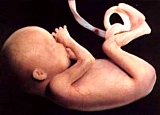
When I read this I immediately thought of the most potent example of life that I have seen, which was an image of the formation of a human foetus. I’ve written about it in my journal so I’ll post it here –
Here is where we begin to get off the facts of life and into the beliefs about life. There are literally countless beliefs, superstitions, pseudo-scientific theories and the like, that have been trotted out over the millennia to explain why we are here, as human beings, on this planet. The search for the cause, the source, for the beginning, the creation, or the creator, the meaning, the reason for it all, has always obsessed humans, solely because of the fear of being here in the first place and the subsequent resentment at continually feeling an alien in an alien place. This obsession with ‘why we are here’ has fuelled the perennial search for a greater or higher meaning to being here. This ‘search’ inevitably leads to the discovery that there is a Greater and Higher meaning – that there is a ‘person or thing’ (or energy) ‘that makes or keeps a thing alive’. To make this ‘discovery’ is effortless: one needs only slide over into the spiritual world, let go, surrender, close one’s eyes and go in. One enters the spiritual world that exists ethereally and is layered over the actual world. This is the world of animating spirits, Gods and Goddesses, ancient healings and esoteric medicines, divinations and prophecies, energies and auras, folk tales and legends, gurus and shamans, fairies and goblins, sacred sites and cosmic planes, chakras and levels of consciousness, telepathy and spiritualism, visions and entities, ESP and UFO’s, Chi Gong and Feng Shui, somas and souls, mysticism and meditation, rituals and rites, reincarnations and past lives, karmas and dharmas, devils and demons and so on. This whole phantasmagoric ‘other-world’ has been so embellished, so documented, so believed in, and made so substantial in the human psyche as to be convincingly real – and it is no small task to wrench oneself free from the common beliefs and Truths of a spirit world. One would not bother unless one had a direct experience of the actual world and then one would never settle for the imaginary, the ethereal, the second-rate. One would never settle for ‘right-suffering’, or being ‘grateful’ to some-one or some-thing for ‘life’, when one could eliminate the instinctual source of fear and sorrow that is the very cause of suffering and resentment in the first place. One would never bother with being Here and Now with one’s head stuck in the clouds, searching for True meaning, when one could be here and now in the actual world with one’s feet firmly on the earth, with meaning abundantly and extravagantly apparent everywhere.
Which brings us to the definition of a person’s life as in ‘my’ life. I find ‘a person’s animate existence viewed as a possession of which one is deprived by death’ the most telling definition. As human beings, we have no memory of how we got here, we resent being here, we try to make the best of it, we seek an escape from life in the form of redemption or salvation, we desperately fear death and, as old age sets in, passionately hope for life after death. And this little lot of sad, sorry and fearful continuum of emotional memories and reactions, we call having a ‘life’. A person’s life is, in fact, no more than the bundle of emotional memories of the past and emotional-backed anticipations of the future and the whole lot is typified by see-saw swings of fear, aggression, nurture and desire. ‘I’ – as the thinker – desperately seek to keep the instinctual ‘me’ – as the feeler – under control and in check by being good, being loving, being caring, etc. As one’s life progresses this leads to the development of a cunning cynicism that obliterates any naiveté and fosters a continual need for ‘self’-control that actively inhibits one from breaking free from the shackles of one’s social identity. Thus one is fated by nature at conception to be an instinctually-driven being and is then fettered by nurture from birth onwards to be a social identity bound by morals, ethics, values, traditions, and psittacisms and – as Frank Sinatra sang, so bitter sweetly, – ‘That’s life’. But actualism provides the solution to the Human Condition and ‘How am I experiencing this moment of being alive?’ is the path to the door marked Freedom from the Human Condition. By continuously asking oneself this question, and doing whatever is necessary to substantiate happiness and harmlessness in this moment, one begins to disrupt the continuity of one’s emotional life and weakens its stranglehold and dominance. The exclusive attention paid to this moment of being alive actually reduces the tendency to dwell on past emotional memories or be emotionally occupied with future events. This has the effect of shrinking one’s life to this moment only – which is the only moment I can experience being alive. Thus one gradually eases out from having an emotional life and begins to live this moment, and this moment, and ... The aim is to string more and more of those moments together, and one day you get to lay in bed at night time and say ‘What a perfect day I had!’. And then the aim becomes to string more and more of those days together and you find that you are on a path that frees you from malice and sorrow. And then you find yourself living a Virtual Freedom – ‘virtual’ as in ‘that is so in essence or effect, although not recognized formally, actually’. And then you know that your ‘life’, as you knew it, will never be the same again – in fact, it is soon to end completely and not a trace of the old ‘me’ will be able to surface ... ever again. Virtual Freedom is the first step – ‘self’-extinction the next.
The final relevant definition points to attaining a new Life – as in being Born Again or becoming Enlightened or Self-Realized, whereby one takes on a new imaginary identity in an new imaginary life – thus becoming ‘freed’ from the state of sin (or life in the real world). For those not so dedicated to the pursuit of a spiritual New Life there is the more secular version offered by some therapists whereby the aim is to strengthen, en-richen or empower one’s existing ‘life’ such that one wins more than loses, one overcomes adversity, one fights for one’s rights, one becomes better, stronger, more powerful, more self-fulfilled, more self-centred, etc. Both approaches fail to address the fact that human beings are programmed with an instinct to survive that makes fear, aggression, nurture and desire an integral part of the Human Condition. Actual Freedom is the only approach to the human dilemma that addresses this fact – every other approach, avoids this fundamental fact. Actual Freedom is the third alternative to the traditional acceptance or the spiritual avoidance of one’s lot in life. What an excellent thing to discover – the chance to actually do something about one’s lot in life – to become happy and harmless. So, this may have been of interest to you as it relates to your ‘it seems that still there is something that could be called ‘immortality’ in a certain sense of this word’ comment. Perhaps what I have written will be ‘food for thought’ – which, after all, should
be the point of a mailing list devoted to peace and freedom.
PETER: As for straying too far from the business at hand, I do note that you have ardently, consistently and repeatedly rejected conducting any ‘self’-questioning of this type, so I fail to see how you can stray from a course you have yet to even consider beginning to undertake. RESPONDENT: The course is to complete the advice ‘I thoroughly recommend the study of actualism’, and there with determine the truth of the worldview (a comprehensive view of the world and human life) being called actualism. At this point, in completing the advice ‘I thoroughly recommend the study of actualism’ and following the advice at the actualism website, there has been no ‘... ‘self’-questioning of this type’ or any type. However, the process of the universe giving rise to the circumstances that resulted in inanimate matter becoming animate matter has been presented, and is now being questioned to assure a clear understanding of the posits of the worldview called actualism. We will of course discuss what you describe as ‘... ‘self’-questioning of this type’ or any type, when it is encountered in the sequence recommended by the text of the AF Website. Now, since the questions:
PETER: You do flutter around a bit. This new question obviously refers to my previous comment –
I see you are back with your obsession as to how or why animate life was created and no doubt, what or who created it. I have already replied that indulging in such philosophical, metaphysical or spirit-ual postulations about an event that, by all the available evidence, initially occurred billions of years ago is of zilch interest to an actualist. You can posit away to your hearts content as you chose, but it does nothing to alter the fact that ‘an event of no little significance’ happened ... and is happening. Diverting to something I wrote in my Journal about this type of questioning may be of relevance to someone interested in actualism –
RESPONDENT: It was only then that life started to show where the real problems were and what could be done about them. I will try to condense what I have come to see in as few words as I can. After my first awakening/ satori/ enlightenment it was clear that life was one. That some how all the seeing of separate parts was a trick of the thinking mind. This left me with a deep love for all being, but it also brought up more questions. It had turned my life inside out. PETER: When you say ‘it was clear that life was one’ you must be referring to a feeling that life was one. As I look about me I see that there are 6 billion human beings on the planet all battling it out in a grim instinctual battle for survival. And this same battle has been going on for millennia while half the world thinks that suffering is God’s way of testing us and violence is the work of the Devil, and the other half keeps insisting it is all an illusion. The fact that over 160,000,000 human beings have been killed by their fellow human
beings in wars in the last century alone, that over 40,000,000 humans killed themselves in suicides and that over 1,000,000,000
human beings were affected by warfare belies you feeling that ‘life is one’. These are flesh and blood human beings,
not illusionary and not ‘a trick of the thinking mind’. And much of the killing was done in the name of love, be it
earthly or Divine.
RESPONDENT: So, what is this perspective? If we look at life in its entirety, it appears that our universe is comprised of some basic substance of intelligence which has been building up more and more complex elements until ‘life’ is born, and then that life is built up into more and more intelligent beings, culminating in humans, at least to the point we are at, now. PETER: Hmmm... The human species, the most sophisticated of carbon-based life forms, capable of thinking, planning and reflecting, represents the pinnacle of the emergence and development of carbon-based life forms known in the universe. The current human species has emerged after a battle for survival that anthropologists estimate has been on-going for millions of years. Early human life was a tough and relentless battle for survival based on ‘kill or be killed’, the animal survival instinct in operation at its most basic and primitive level – ‘what can I eat ... what can eat me?’ The physical evidence of early tool use, language and settlement represents the first sign of the emergence of intelligence, a faculty totally unique to the human animal species. There is no other intelligence in the universe – nor ‘beyond’ or ‘outside’ the universe. To propose that the universe is intelligent or that there is such a thing as ‘life’ independent of that which we experience with our senses is to indulge in anthropomorphism. The physical universe is much, much more than intelligent – it is eternal (having no beginning or end) and infinite (having no edge to go ‘beyond’), vibrant, sparkling, magnificent, magical, and happening this very moment. It is these qualities of the physical universe that the theomaniacs imagine to be their own qualities – eternal as in feelings of Timelessness and Immortality and infinite as in feelings of Spacelessness and Oneness. As for, ‘culminating in humans, at least to the point we are at, now’ ... We human beings are remarkable among the animal species only in that we have a large ‘modern’ brain or neo-cortex, capable of thinking, planning and reflecting, that envelops the primitive ‘lizard’ brain, the source of our animal instincts. Intelligence, the ability to think, plan, reflect and communicate, has resulted in the astounding development of the human species, from a grim and deadly fight for the survival of the species, to one of increasing safety, comfort, leisure and pleasure. This last century, in particular, has seen astounding advances made in agriculture, manufacturing, health, life expectancy, wealth, transport, information processing, instant and world-wide communications, social services and education. Yet, despite the amazing technological advancements and organizational development of the human species on this planet, the Human Condition is still epitomized by two major factors ... malice and sorrow. Why? * RESPONDENT: The great human adventure is to travel up the stem of the lotus plant until we reach the state of the flower (enlightenment) and are free of the mud (material world) at the bottom of the pond. PETER: My radical proposition is that all the facts point to the unmitigated failure of this ‘great human adventure’ that has been on-going for thousands of years. T’is but a tragic human struggle betwixt good and evil based upon a fervent belief in a higher ‘spirit-world’ that is above and beyond the earthly ‘mud’. There is no good or evil in the actual world – it exists only in the heads and hearts of human beings Should we humans give the ‘great human adventure’ of following the spiritual teachings another millennium to deliver the goods? Perhaps two ...? Should we wait for Christ to come back, Maitreya to finally appear or for everyone on the planet to become magically enlightened? How long are we willing to continue with this ‘great human adventure’? The New Dark Age has now been superseded by the Next Age in some countries, so do we mark that bit of the adventure as a failure or do we look forward, with hope, that the Next Age will bring peace on earth? RESPONDENT: In terms of the 60’s movement, it is most certainly not dead, but lives on in a million small ways in many organizations and government departments, schools, etc. But we, as humans, are so impatient for it to revolutionize our world, that we feel disillusioned by its slow progress, especially as we see the devastation of war and pollution. PETER: Again my question would be how long do we wait – isn’t 3,500 years being patient enough? And who or what are we waiting for? What got me off my bum, and my head out of the clouds, was – accepting the down-to-earth challenge that if I couldn’t live with one other person in utter peace and harmony, equity and parity, 24 hrs. a day, every day, then life on earth was indeed a sick joke. I took peace on earth as a personal challenge. RESPONDENT: Intelligence and gentleness will win out and the pain of the current age will be largely forgotten. PETER: Again do you have a time frame for this to happen? Human malice and sorrow has been on-going, and despite all the good intentions, prayers, consciousness-raising, trust, faith, hope and belief the last century was the bloodiest to date. Given that at least 160 million human beings died in wars in the last century and at least 40 million human beings killed themselves in suicides, that means at least 200 million children born this century will meet a similar fate. I recently saw an interview with a monk who said that the first question he was going to ask God was ‘how come there is so much pain and suffering?’ Given that God is a fantasy the question to ask is ‘Why am I malicious and sorrowful ... and what can I do about it?’ RESPONDENT: We can see in our modern world many signs that humans are becoming more and more conscious of the need to reform human characters and solve our problems with dialogue, not violence. PETER: Usually we divide our instinctual passions into groupings of ‘good’ and ‘bad’ and try either to repress or deny the ‘bad’ ones – fear and aggression – while giving full vent and validity to the ‘good’ ones – nurture and desire. Unfortunately the well-meaning attempt to curb fear and aggression by moulding ‘good’ and ‘loving’ citizens has had precious little success as is evidenced by all the wars, murders, rapes, tortures, domestic violence, corruption, loneliness, despair and suicides that are still endemic on the planet. The passions of love and hate, forgiveness and retribution, compassion and selfishness, etc. come inseparably in pairs, as is testified by the continual failure of humans to live together in anything remotely resembling peace and harmony. We still rely on lawyers and laws, courts and jails, police, armies and guns to enforce law and order – a poor substitute for actual peace and harmony. The failure of morals, ethics, values and ideals to bring anything remotely resembling peace to this fair planet is legendary. The currently fashionable ideal of Human Rights serves only to reinforce the rights of various ethnic, religious and territorial groups to firstly, hold conflicting beliefs and then, to fight for those beliefs. Retribution is also highly valued as the right to ‘justice’ and, as such, resentments and grievances between rival groups of humans or individuals are passed down from generation to generation. When appeals to moral and ethical values fail to end human conflicts, temporary ceasefires are maintained at the point of a gun. Whenever conflict erupts again a truce is then renegotiated and a ceasefire reinforced and the whole cycle of suppression, justice and retribution is set in motion yet again. Given the human genetic-heritage of animal instinctual passions, it is a tribute to human perseverance and stubborn will that the species has survived and flourished as well as it has. It is obvious that a new solution needs to be found, for the traditional solution of instilling unliveable ethics, preaching pious morals and maintaining law and order at the point of a gun has clearly failed in the past, is still failing, and always will fail to bring actual peace on earth. The next great challenge for human beings in this time of increasing safety, comfort, leisure and pleasure is to eradicate and eliminate human malice and sorrow. To do this means to actively challenge and confront the ‘mother of all beliefs’ – that ‘you can’t change human nature’. The questions I asked myself were ... ‘why not?’ ... and ‘who said you
can’t?’
RESPONDENT: Who said that life was supposed to be easy!? PETER: Who said life was not meant to be easy and why do you believe them? Just because God said so or Siddhartha Gautama said so or some Johnny come lately God-man repeated it doesn’t mean it is true or True. Of course life was meant to be easy and we all know it except we live in fear of the wrath of God or the scorn of our peers. The cute thing is once you stop believing in God you are free to stop believing that life was meant to be about suffering rightly. This then frees your senses to a literal smorgasbord of sensual delight that is on offer in this day and age on this cornucopian planet. Life was meant to be easy – only a masochist would believe otherwise. RESPONDENT: How did you come to that conclusion? I don’t know whether life is supposed to be easy or hard, a little bit of both could be ideal maybe. If everything was easy we might have a hard time appreciating the good times. To me it appears that we need challenges at least in some ways. Life is pretty beautiful today despite all the malice and sorrow, don’t you think? We can see the potential for a positive existence on earth, at least I can.. I must say that I have a fundamentally positive relationship to life even if we’re trying our best to destroy ourselves and the planet. I’m certainly not insisting that life HAS to be hard, a struggle for survival I mean. But I personally can’t see an existence on earth being PERFECTLY easy and effortless, that is utopia I think. PETER: Utopia and more is evident in the PCE, in fact, it is from these experiences that the concepts of utopia and heaven on earth have arisen. These experiences have been interpreted as spiritual experiences and those who have genuinely had a permanent altered state of consciousness do indeed feel the world to be a beautiful dream. Thus they see those who suffer and fight as living in a dream from which they need to awaken. In a PCE it is startlingly obvious that this verdant paradisiacal planet is perfect, pure and delightful and that my existence is easy and effortless because ‘I’ as neurotic thinker and ‘me’ as passionate feeler are absent. The avowed aim of an actualist is to live this state 24 hrs. a day, every day. * RESPONDENT: Living life is extremely challenging and what else could it be? PETER: As humans, we are all subject to physical dangers, ill-health, accidents, earthquakes, floods, fires, etc. which can cause loss and pain. But to have, and actively indulge in, emotional suffering additional to the hardship is to compound the situation to such an extent that the resulting feelings are usually far worse than dealing with the facts of the situation. What impresses me is the extraordinary steps taken in wealthy, materialistic countries to not only reduce the hardship caused by physical dangers but to prevent them from happening in the first place. Early warning systems for fire, flood and storm, earthquake and storm proof buildings, emergency services, evacuation and relief plans, etc. all help to minimize and in many cases negate hardship, loss, injury and physical suffering. RESPONDENT: Peter, sometimes I wonder why you have any need for the third alternative since you often praise our fantastic western society. But I guess it’s mainly to show the failures of the spiritual approach. PETER: No, you misunderstand me. What I came to see was that ‘I’ was what was preventing me, this flesh and blood body, from delighting in the perfection and purity of this actual world. As such I stopped blaming external circumstances for making me unhappy or causing my sorrow. As such, I am able to be happy and harmless in the world as-it-is, with people as-they-are. With common sense operating freely I have chosen a place to live that is both reasonable safe and sensually satisfying. If for some reason I found myself in different circumstances, less preferable, if you like, then I would still be happy and harmless. However, I sensibly prefer safety, comfort, leisure and pleasure any day. RESPONDENT: I agree that these early warning systems etc. benefit us and are steps towards a more civilized way of living; life is precious and we should try to eliminate everything that can threaten us physically and hopefully even psychologically destructive influences in our society. PETER: I don’t regard life as precious in any way. Most species have a capacity for multiplication that is astounding. The average human male ejaculation has the capacity to fertilize millions of eggs and the average female has an egg-producing capacity to birth each year and nowadays we expect each baby to survive. This is not preciousness but blind nature’s way of ensuring sufficient quantity purely for the species’ survival. There are an estimated 6 billion human beings on the planet and it is estimated that there are currently between 2 and 4.5 million individual animal and plant species on the planet. Perhaps voracious excess to the point of gratuitous gluttony would be a better way to describe the quantity, abundance and variety of life-forms on the planet. RESPONDENT: I totally agree that we shall do everything to make life better for us in a materialistic way (for everybody, that is, not just in our part of the world). But is life going to be easy? More comfortable, yes, and less challenging from the point of view of survival. But isn’t the challenge of life always going to be there? Everybody still have to find out for themselves so there’s always going to be a winding road to some extent. If one is absolutely serious about life than I can’t really see that it’s going to be easy all the time. Even when one has found the meaning of life it isn’t necessarily going to be easier, certainly much, much more inspiring and ... ... let’s say happy. But that is your point, isn’t it, happiness equals ease? OK, I don’t want to take this too far since I agree with you that there’s no need to struggle in vain but that true happiness might just not look exactly the way we think it does. There’s not many to tell about it either, true happiness is certainly a rare jewel on earth. PETER: In fact, it doesn’t exist for everyone is either a self or a Self (a
person who believes and teaches that physical life on earth is essentially a suffering existence). As you acknowledged ‘ suffering
on earth made perfect sense to me while in the spiritual camp ’. One cannot think or feel purity and perfection, it is
beyond imagination and feeling – it has to be actually lived.
RESPONDENT: Because all we have is what we have now, and in reality. And who we are is who we are good bad and indifferent, crazy or sane. I am and have been all these things. and the idea that I might be something else more or less in the future is not real to me except to say sure okay fine, but what I am NOW is terrific. I have life and awareness and it’s an amazing ride. Life. Life itself. PETER: Given the fact that we are only able to experience this moment of being alive the idea of life as a continuity is a bit of a furphy. Sure I can remember past events, people or places (with a bit of an effort in some cases) but I have no emotional memory of them. They simply happened in the past, there was no ‘me’ there as an experiencer and as such there is no emotional memory in terms of good, bad, right, wrong. As for the future I make sure I have a list of the things I need to do, but beyond that I have got no idea what will happen. Sure, today I will probably type a few e-mails, have lunch down-town, have a romp with Vineeto, we are going out to a birthday party tonight, but still I have no idea what will happen, who I will meet, what I will say, what they will say. To only experience this moment of being alive is so much more extraordinary than having a ‘life’ (as a continuity). It is, at last, to live freely and fully in the actual world of people, events and things. And it is all happening right now, this very moment. RESPONDENT: For me it’s not even about being harmless – as in not hurting another. It’s about being as honest as possible with myself, and that in fact may mean not hurting another – but it may mean that someone is ‘hurt’ also. PETER: For me, I often see the New-Age version of ‘I want to be honest with you’ or ‘I just want to share something with you’ as nothing more than I want to give you a ‘serve’. The only person to be honest with is yourself. If you are not honest with yourself then who are you kidding. It is your life you are living. It is your happiness that you are concerned about. What I found was that to become free of malice and sorrow is the only way I can be absolutely sure that I am not hurting others. They may well be offended or have whatever re-action they have but if a good, honest search around inside reveals no malice then that is the key. To really get into exploring feelings and emotions. RESPONDENT: My own hurts tell me a lot. I learn from them a lot. PETER: It is often said we grow and learn from our suffering. My experience is that this is in the same category as ‘Life wasn’t meant to be easy’, ‘Life’s a bitch and then you die’ No wonder we humans think it is inconceivable to be happy and harmless. I just decided, after I met Richard to raise the bar, set my sights beyond the normal limits. To break free of the shackles. And I found the only restriction was fear. There are no demons in the actual world and therefore there are no need for Gods. Cute, Hey. And then life is perfect, easy, comfortable, delightful, carefree – and you get to do
things, meet people, eat good food, have sex, etc. as a bonus on top of being alive.
PETER: Almost all killing is a passionate affair, unless one practices dis-association, and then it simply becomes a mindless affair. If one is willing to die as a self-sacrifice, hoping for some mythical after-life paradise, it makes eminent sense to sacrifice one’s ‘self’ for peace in this paradise, on earth, here, now. RESPONDENT: And again, so what? The world is the way it is, and nobody learns anything from anyone else. PETER: And yet we take the Ancients literally at their word – believing everything they are supposed to have said, fervently ‘learning’ away. Our total learning has come from the Ancient Ones, merely regurgitated by the current generation of priests and Gurus. For me, it was serendipitous to have come across Richard and learn all I could from a man who had been Enlightened and seen through the delusion it is. Who refused to stop until he had unravelled the Human Condition in its entirety. Who refused to accept that the world is the way it is and that it will always be that way – that you can’t change Human Nature. ‘Why not?’ was the question he asked. Not a trace of Ancient Wisdom. Not a trace of surrender. No sitting at the feet. No trusting. No blindly following. No believing. RESPONDENT: It is all from experience. Life is to be lived, not thought about. PETER: What an appalling scenario. If one doesn’t think for oneself one just ends up following and believing everyone else. The ability to think and reflect is the essential ability of the human species. To think otherwise is to be gullible in the extreme. RESPONDENT: A mystery to be lived, were Osho’s words, I remember. PETER: To the mystic, life has to always remain a mystery, for what they peddle is mystical, imaginary and ethereal. They, in fact, vehemently oppose any attempt to make sense of life, to apply intelligent and reflective thought on the subject. They actively discourage looking at the facts and instead encourage belief, fantasy, imagination and intuitive feeling. To an actualist, the solving of the mystery is the journey and adventure of a lifetime.
The actual world that one emerges into far exceeds any imaginary and ethereal mystical realms.
PETER: Just a little comment on what Mr. Watts has said, RESPONDENT: In a certain sense Zen is feeling life instead of feeling something about life. Alan Watts PETER: It is another of those poems that clearly point to the spiritual path as being a feeling path to an ‘inner world’. One becomes a ‘watcher’, ‘feeling’ one’s way in the world and as such is cut off from the direct sensate experience of the actual world that is ever-present – under our very noses. To ‘feel’ life is not the same as fully living life, exactly as ‘thinking’ about life is not the same as fully living life. To be actually here is to be here in this moment of time, which is the only moment one can experience anyway. To be actually here is to be in this place which is no-where in particular in the infinitude of the physical universe. Coming from no-where and having no-where to go, we find ourselves here in this moment in time, in this place in space. To be here is to be the universe experiencing itself as a human being. Freedom from the Human Condition – Happy and Harmless Peter’s Text ©The
Actual Freedom Trust: 1997-. All Rights Reserved.
Disclaimer |

 f
f